

About Professor Virginia Kilborn
Professor Virginia Kilborn was appointed as Swinburne’s inaugural Chief Scientist in May 2021. She is a renowned radio astronomer who has led a highly successful career delivering research with impact within the local scientific community and on an international scale.
In what is believed to be the first appointment in an Australian university, Swinburne’s Chief Scientist provides leadership in science within and outside the University, driving scientific relationships and policy with government, industry and schools.
Aligned with Swinburne’s Horizon 2025 Strategic Plan where people and technology work together for a better world, Professor Kilborn is dedicated to fostering transformative science that creates genuine social and economic impact.
Key focus areas
Science research
Science education
Science policy and development
Science equity and diversity
-

“There has never been a more important time to be involved in science. As we step into the critical challenges of our nation and the world, the scientific voice must be more present.
I am proud to represent that voice and continue to spearhead the great work that fellow scientists are performing at Swinburne and more broadly.”
Professor Virginia Kilborn , Swinburne's Chief Scientist

Representing the scientific voice
After joining Swinburne’s Centre for Astrophysics and Supercomputing in 2003, Professor Kilborn has taught undergraduate and postgraduate astronomy and held multiple leadership roles as Chair of the Department of Physics and Astronomy, Dean of Science, and now as Swinburne’s inaugural Chief Scientist.
Leveraging her extensive astrophysics knowledge and proven leadership experience, Virginia has strategically worked to further education, research, policy and equity at Swinburne and throughout the scientific research community.
Professor Kilborn is an active member of the Australian Astronomical community, a past President of the Astronomical Society of Australia, and current Chair of the National Committee for Astronomy (NCA) with the Academy of Science.
She is also playing a leading role in advancing Swinburne’s science and technology focus and helping guide our learners, educators, and industry partners on the path to a digital, tech-rich future.
Swinburne's space technology capabilities
Learn more about space technology at Swinburne and how we are paving the way by combining our globally renowned capabilities in astrophysics, aerospace, aviation, engineering, advanced manufacturing, and digital technologies.
Science news
-
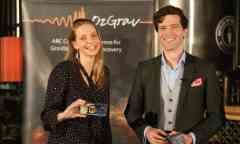
Swinburne celebrates astronomy as part of National Science Week
- Astronomy
- Science
For this year’s National Science Week, Swinburne invites you to take a journey through the cosmos in a series of fun and interactive activities.
Wednesday 12 August 2020 -
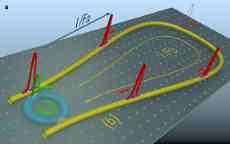
New optical pulse seen in micro-combs may unlock practical applications
- Science
A new class of microcomb pulse may lead to pocket sized ultra-precise optical clocks able to replace GPS and other applications.Tuesday 12 March 2019 -
Illegal, occasionally deadly, and not much fun. What is the frog toxin Kambô and why do people use it?

- Health
- Science
Kambô is an oozy substance harvested from the defensive skin secretions of the Amazonian giant monkey tree frog. In the traditional medicine of some indigenous peoples of the Amazon, Kambô is applied to superficial burns on the skin of participants to produce an intense purging effect.
Tuesday 16 May 2023 -
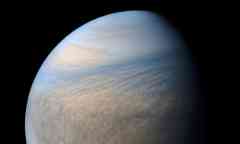
Life on Venus? Traces of phosphine may be a sign of biological activity
- Astronomy
Adjunct Research Fellow, Dr Lucyna Kedziora-Chudczer, discusses the discovery that turned planetary science on its head. In the harshly acidic clouds of Venus, scientists have discovered a gas that indicates the presence of microbes.Wednesday 16 September 2020 -
STEM Hub for girls receives funding boost

- Education
An online hub that encourages girls to participate in STEM opportunities has received $1.2 million in funding from The Invergowrie Foundation.
Monday 18 July 2022 -
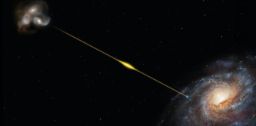
We traced a powerful radio signal to the most distant source yet – a galaxy billions of lightyears away
- Astronomy
- Technology
Every day and night, hundreds of thousands of intense, brief flashes of radiation suddenly flicker on and then off all across the sky. These “fast radio bursts” are invisible to the naked eye, but to a radio telescope many almost outshine everything else in the sky for a few thousandths of a second.
Friday 20 October 2023


Explore science with Swinburne's Chief Scientist
For any strategic science-related advice, expert commentary or public engagement requests, please contact Professor Virginia Kilborn at vkilborn@swinburne.edu.au.