

The Centre for Astrophysics and Supercomputing (CAS) is dedicated to inspiring a fascination with the universe through research and education. We aim to understand how the universe around us came to be and determine the nature of the physical laws making it work. By pursuing this work, we will enable technology development, train the next generation of physical scientists and inspire the public.
-
Our research
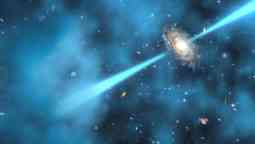
Research within the centre spans the entire electromagnetic spectrum covering computational, theoretical and observational astronomy.
-
Our people

Meet our teams of directors, academics, PhD students and committee members.
-
Outreach programs
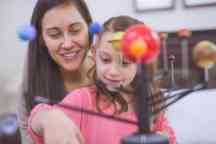
Further your interest in astronomy by partaking in one of our many educational outreach programs, including lectures and school programs.
-
Our study options
We offer bachelor, master and PhD degrees, online courses and many other educational opportunities.


-

"I am delighted to lead one of the world’s foremost astrophysics and supercomputing centres. Here at CAS we embrace collaborations with national and international colleagues and actively welcome visitors. Come and find out what makes us so special!"
Professor Jean Brodie , Director of the Centre for Astrophysics and Supercomputing

Specialist facilities


Did you know?
The Centre for Astrophysics and Supercomputing recently won a Silver Pleiades Award for taking active steps to advance the careers of women.
Attend our colloquia and conferences
The Centre for Astrophysics and Supercomputing colloquium program offers a diverse range of presentations on all facets of astronomy.
Centre news
-
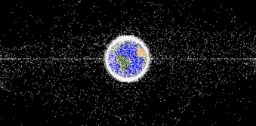
Space is getting crowded with satellites and space junk. How do we avoid collisions?
- Science
- Astronomy
Reports this week suggest a near-collision between an Australian satellite and a suspected Chinese military satellite. Meanwhile, earlier this month, the US government issued the first ever space junk fine. The Federal Communications Commission handed a US$150,000 penalty to the DISH Network, a publicly traded company providing satellite TV services.
Friday 20 October 2023 -
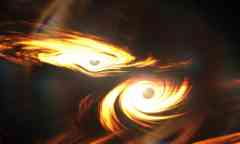
First ever detection of monster black hole collision
- Astronomy
Two monster black holes collided to form an intermediate-mass black hole, about 150 times as heavy as the Sun.
Thursday 03 September 2020 -
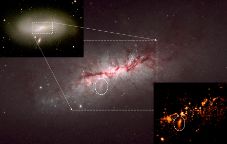
A cosmic romance written in the stars
- Astronomy
- Science
Astronomers have discovered the intact heart of an infalling galaxy – a significant discovery of a star cluster that is falling into a spiral galaxy.
Thursday 13 January 2022 -
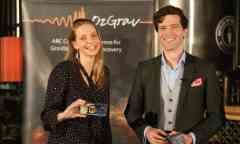
Swinburne celebrates astronomy as part of National Science Week
- Astronomy
- Science
For this year’s National Science Week, Swinburne invites you to take a journey through the cosmos in a series of fun and interactive activities.
Wednesday 12 August 2020 -
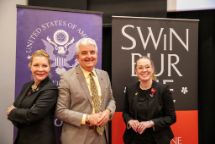
Swinburne’s Spotlight on STEM: A Night of Space Innovation with Shelli Brunswick
- Astronomy
- Technology
- Science
Swinburne University hosted a Spotlight on STEM event with space innovator Shelli Brunswick, exploring space technology, leadership, and career opportunities in the space industry
Friday 21 March 2025


Find more news articles about the Centre of Astrophysics and Supercomputing.
Related resources and services
Swinburne Astronomy Productions
With over 20 years' experience, Swinburne Astronomy Productions brings the universe to life through stereoscopic-3D movies and a wide variety of digital media products.
Swinburne Astronomy Online (SAO)
Learn about the fundamental concepts and key issues in contemporary astronomy through our fully online postgraduate degree programs.
Cosmos
Explore our publicly accessible online encyclopedia to find out everything you need to know about astronomy.
Explore other research centres
-
Centre for Astrophysics and Supercomputing
-
Centre for Design Innovation
-
Centre for Forensic Behavioural Science
-
Centre for Mental Health and Brain Sciences
-
Centre for Quantum Science and Technology Theory
-
Centre for Social Impact Swinburne
-
Centre for Sustainable Infrastructure and Digital Construction
-
Centre for Transformative Media Technologies
-
Optical Sciences Centre
Contact the Centre for Astrophysics and Supercomputing
If you have any questions, or are looking for more information, feel free to contact our office on +61 3 9214 8000 or at contact@astro.swin.edu.au.