
Australia’s first research trial using psychedelics to treat depression produces promising findings

Promising findings have emerged from Australia’s first research trial using psychedelics to treat depression at Swinburne.
In summary
- Psilocybin could be the future of mental health care according to Australia's first research trial using psychedelics to treat depression.
- Two 25mg psilocybin sessions alongside other therapy supports had promising results for the Swinburne led team.
- The trial offers hope to the millions of Australians struggling with depressive disorders.
Psilocybin could be the future of mental health care, with promising findings emerging from Australia’s first research trial using psychedelics to treat depression, led by Swinburne University of Technology.
The study found that by the end of twelve weeks of treatment, with two 25mg psilocybin sessions alongside other therapy supports, most participants experienced a “clinically meaningful reduction in depression symptoms”.
Lead researcher Swinburne’s Professor Susan Rossell says the trial offers hope to the millions of Australians struggling with depressive disorders, particularly those who are unresponsive to existing treatments.
“We found that psilocybin-assisted psychotherapy is an effective real-world treatment regimen for those with treatment-resistant depression.
“We’re making a substantial difference to people’s lives who may have run out of treatment options and hope, and putting Australia at the forefront of psychedelics research globally.”
The study evaluated the feasibility, safety, and efficacy of psilocybin with psychotherapeutic support for treatment-resistant depression. It also investigated predictors of treatment outcomes and individual variability in responses.
Factors such as participant mindset prior to dosing, having a spiritual experience during the session, or changing mindsets were identified as predictors of treatment success. On the contrary, treatment expectations were not a reliable predictor.
And though not all participants experienced substantial improvement, they did not experience any serious adverse effects, a finding that aligns with previous research.
“We’re exceptionally pleased with these promising early findings that pave the way for future psychedelic research on range of other mental health conditions,” says Professor Rossell.
“Depression is a debilitating condition, and this research could have a real impact on countless lives – not just sufferers but their loved ones. We look forward to continuing this lifesaving work.”
-
Media Enquiries
Media Enquiries
Related articles
-
Swinburne joins global biomaterials research training program

- Technology
- Health
- Science
- University
- Engineering
Swinburne has joined the prestigious German Research Foundation-funded International Research Training Group (IRTG) on Multidimensional Biomaterials (MB)2 program
Monday 17 August 2026 -
Healthcare learners put skills to the test at WorldSkills regional competition

- Health
Swinburne has hosted a WorldSkills healthcare regional competition at its Wantirna campus, spotlighting vocational healthcare student skillsFriday 28 August 2026 -
Broccoli could treat untreatable rare nerve disease, Swinburne research finds

- Health
Swinburne researchers have discovered how broccoli could help treat an incredibly rare uncurable disease that only 200 Australians have.
Monday 10 August 2026 -
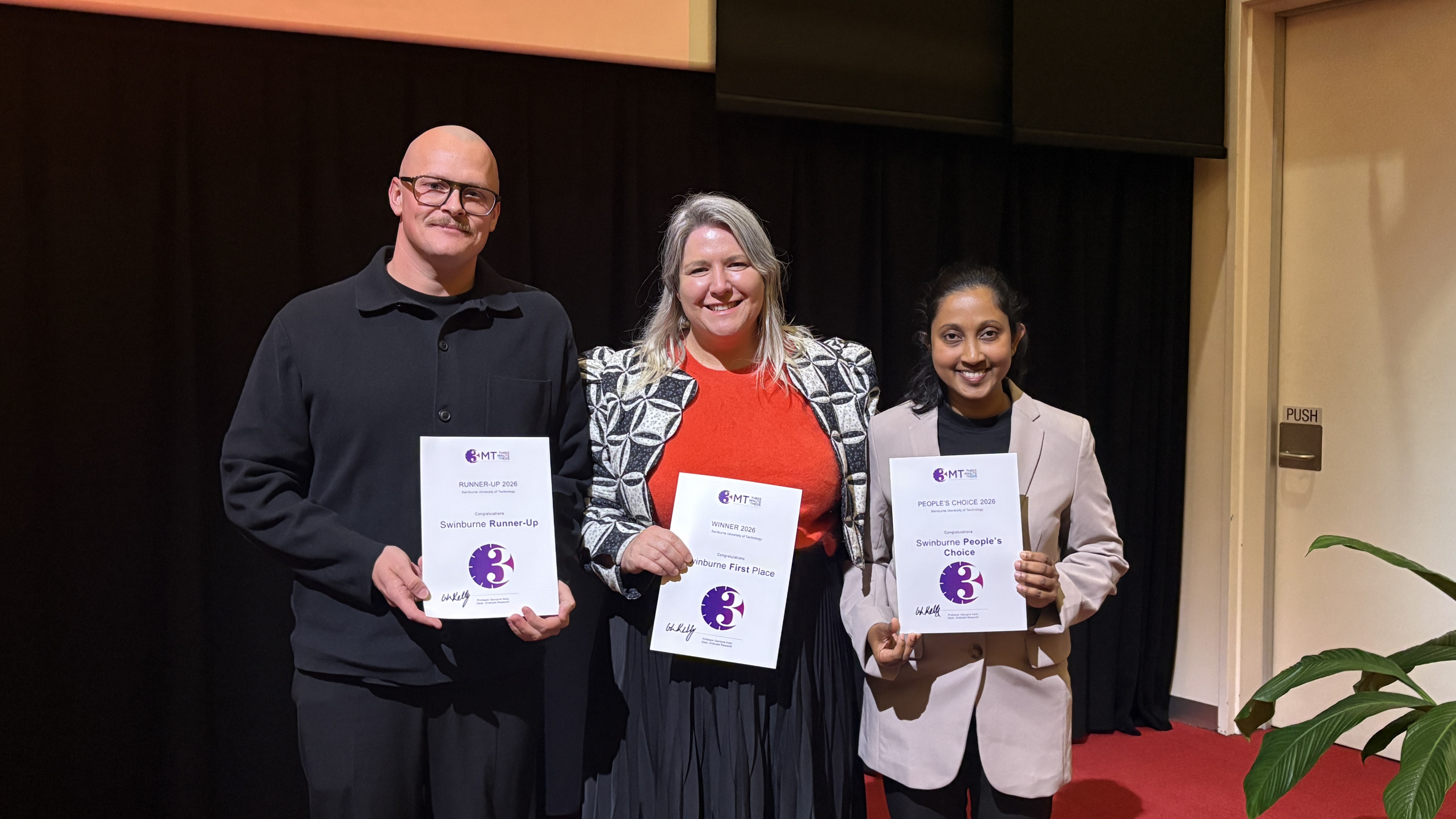
Celebrating Swinburne’s next generation of researchers
- Technology
- Health
- Education
- Business
- Science
- Sustainability
- Engineering
Swinburne’s inaugural Research Festival brought together Higher Degree by Research students and early career researchers to learn, share and connect.
Monday 27 July 2026 -
Award-winning interactive tool helps patients better understand inherited cancer risk

- Design
- Technology
- Health
- Science
Swinburne, in partnership with the Peter MacCallum Cancer Centre and the University of Melbourne have developed The Cancer Risk Thermometer, an interactive decision support tool
Friday 12 June 2026